
The Crooked House of Canterbury isn’t just a quirky building you pass as you make your way down Palace Street (part of the King’s Mile). Also known as Sir John Boys Home, this house one of the city’s most enduring architectural mysteries. With its dramatic lean, timber‑frame charm, and centuries of whispered stories, it feels like something lifted straight from a novel (Alice in Wonderland, anyone?).
For book lovers, history wanderers, and anyone chasing cinematic corners of England, this crooked little building is a must‑see.
Origins: How the Crooked House Began
The building dates back to the 17th century, originally constructed as a typical timber‑framed merchant house. This three and half story building has been thought to be built in either 1617 or 1647 by Avery Sabine, who likely built it for the weavers who worked there. At the time, Canterbury was a bustling trade city of approximately 5,000 people, and homes like this lined the narrow medieval streets.
At the time, timber homes were built with green oak because it was easier to work with, giving many of these homes the appearance of shifting as they settled. But the Crooked House’s story is a little different, and its lean became so dramatic that even Charles Dickens might have taken note of it.
Why the Crooked House Leans
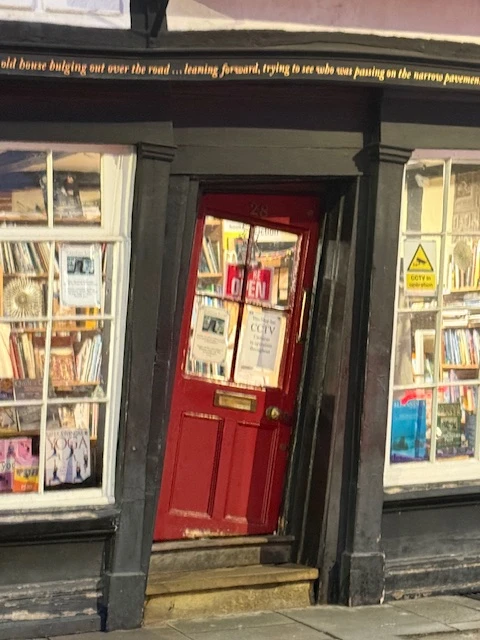
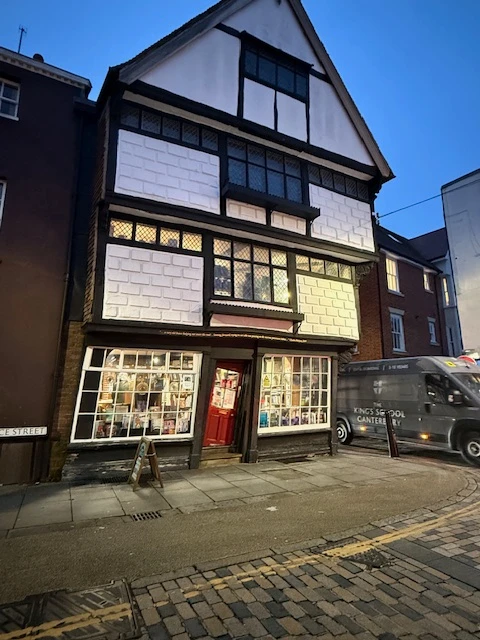
The famous tilt isn’t an illusion—some people estimate the slant to be about 5%, which is a degree more than the Leaning Tower of Pisa. But that measurement isn’t entirely true because different parts of the building are at slightly different slants. The first floor and iconic red door are sharply angled, while the second floor has moved forward and to the side. The third floor has shifted at yet another angle, leaving the whole building a bit of architectural puzzle. But the result is a building that looks like it’s defying gravity and somehow still standing.
The story behind the lean is something less of a mystery than it is a mistake that nearly cost the life of this beautiful timber home. In the mid-1800s, an attempt was made to renovate the existing structure. During those efforts, the contractors tried to take out the original chimney stack, which caused it to twist and slide. According to local history, the sole reason the building wasn’t lost was because of the skill of the original carpentry. Additional attempts were later made to fix the error, but they only made the lean worse. Finally, in 1988, the chimney collapsed in on itself, and the house was almost lost. The city stepped in and provided the funds to build a steel frame, which saved the house (and made it safe for visitors. The final result ensures the building will no longer shift but gives the appearance of what you see today.
A Building with Many Lives
As you can imagine, a house built over 400 years ago has had many lives. Over the centuries, the Crooked House has been:
· A merchant’s home
· A music store
· A school uniform shop
· An art gallery
· A bookshop
· An antique shop
But today it is home to the Catching Lives bookstore and is perfect for exploration.
A Bookshop Rich with Atmosphere
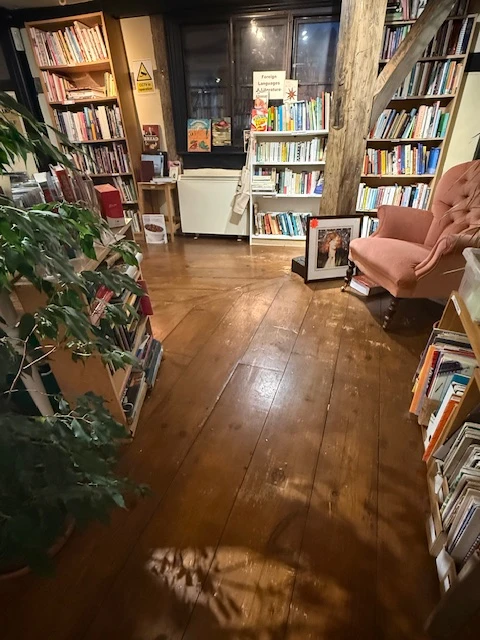
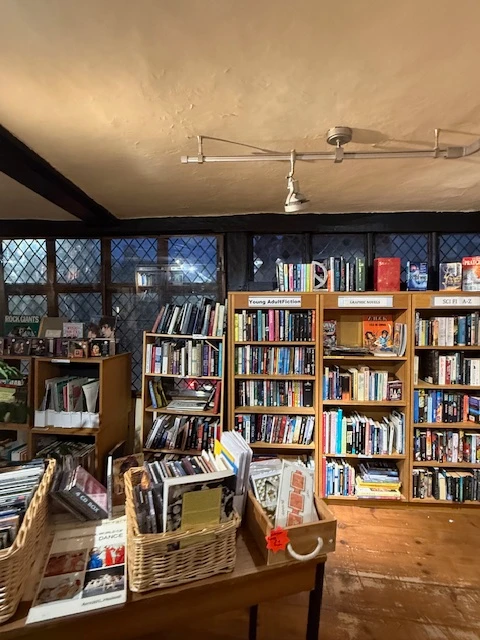
Catching Lives Bookstore is like walking into a storybook. Rows of books are seemingly everywhere. Windows slant at impossible angles, specialized hinges allow the door to operate, floors slope and groan under your feet, and the shelves lean into the building’s tilt. Even the house itself feels like a book at the end of the shelf, leaning against its neighbors for support.
It’s easy to see why it is one of the most sought after and photographed buildings in Canterbury.
The Crooked House in Canterbury’s Literary Culture
Charles Dickens spent much of his time in Canterbury and is noted throughout the city. The Crooked House is one of those locations, as many believe it inspired the home in of Agnes Wickfield in the classic novel, David Copperfield. An inscription above the door, taken from the novel, reads:
“… a very old house bulging out over the road … leaning forward, trying to see who was passing on the narrow pavement below.” —Charles Dickens, 1849.
Whether this was the specific house the novel refers to is debated among historians. Official records of any visits by Dickens have never been located. But his time in Canterbury is well-documented, including his stay at the Sun Hotel (or The Little Inn), which is an easy walk away. It’s easy to imagine how he could’ve easily referred to this home.
Crooked House isn’t just a quirky landmark. The house serves as a reminder of how cities evolve and how their imperfections often become their most beloved features.
The stories and legends tied to the home tell us about a past many might overlook.
Its appearance invites our imaginations to wander.
Its door invites us inside to walk in the footsteps of those who came before.
Ultimately, it is a symbol of Canterbury’s layered history, its literary soul, and its ability to hold onto magic even in the busiest corners.
And now home to a few good books.