
Just a short walk from the Canterbury Cathedral is a somewhat hidden treasure in the Canterbury Roman Museum. Tucked down a side street, it’s not a loud or obvious attraction. And you don’t stumble into the Roman Museum so much as slip beneath the city. One moment you’re in the hum of modern Canterbury with school groups, cathedral bells, the shuffle of the high street and the next you’re descending into a cooler, quieter world where the floor plan hasn’t changed in nearly two thousand years.

What You’ll Find Below the Streets
The museum is built directly over the remains of a Roman townhouse, and that’s the magic of it. You’re not looking at artifacts in glass cases (though there are plenty). You’re standing inside the footprint of someone’s life.
-The Mosaic Floor — a geometric burst of red, black, and cream, still anchored exactly where the Romans laid it. It’s the kind of detail that makes time feel thin.
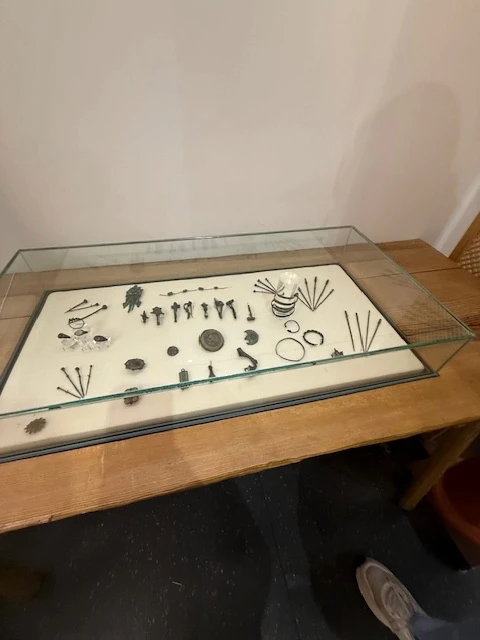
-Everyday Objects — hairpins, pottery shards, coins, tools. The small things that outlast the people who used them.
-Fragments of Frescoes — soft colors, faint outlines, the suggestion of a room that once held light.
-The Hypocaust System — the bones of ancient underfloor heating, proof that comfort has always been a human priority.
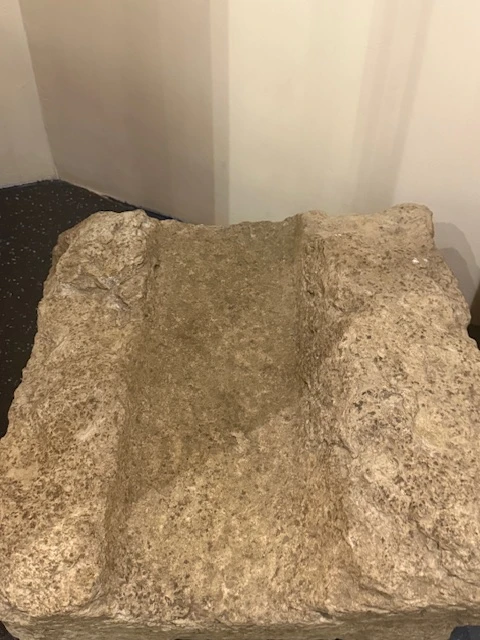
The museum is filled with textures, memories, and quiet revelations.
Why It Matters for Book‑Centric Travelers
If your travel lens is literary, the Roman Museum is a grounding point. It’s the preface to Canterbury’s story—the chapter before Chaucer, before pilgrims, before the cathedral rose from the earth.
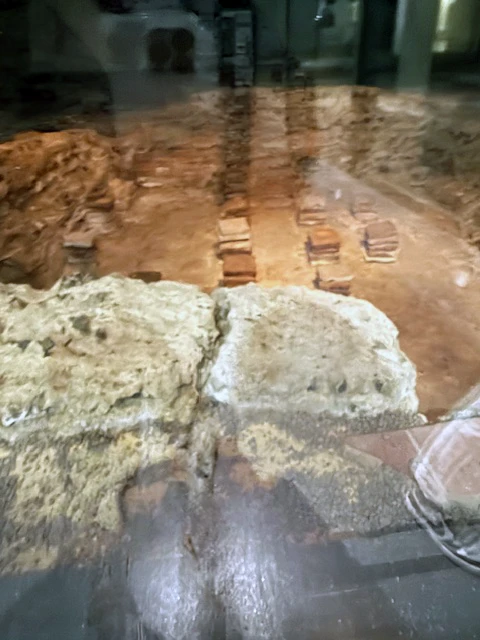
The in-situ townhouse was originally constructed in AD 70 by a wealthy family who lived in the home until approximately 410 A.D. With underfloor heating and intricate mosaic pavement, the two-story home was undoubtedly large and expensive at its time. Once a part of the town of Durovernum Cantiacorum, which was founded shortly after the Roman invasion of Britain, the townhome was set in the center of the original town. The location alone is testament to how important the family who once lived here must have been, and clues to their daily life are on display throughout the museum.
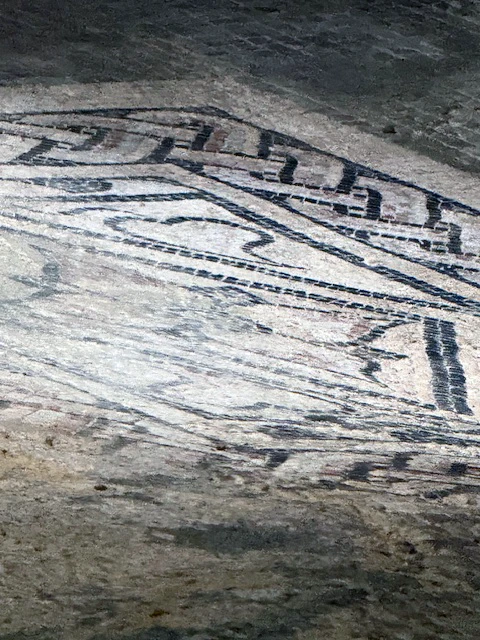
Today, though the visible pavement has been warped with time and shifts in the earth, and while you do have to allow your mind to imagine what might have been, as soon as you take the steps down to what would have once been street level, there is a sense of the stories that live in the ghosts of the past.
For writers and readers, it’s a reminder that:
- Stories begin long before we arrive
- Ordinary objects carry extraordinary echoes
- A city is always written over but never erased
Bring a notebook. This is a place where a single coin or tile can spark a whole narrative. Was there a forbidden love? A political power struggle? The greatest romance of all time or is it a space that sparks a new fantasy with Roman lore?
A Sensory Moment to Anchor Your Visit
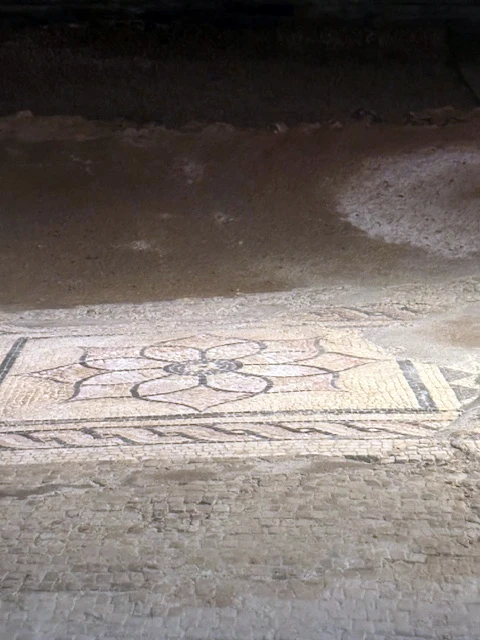
Stand near the mosaic. Let the cool air settle on your skin. Listen for the muffled footsteps above where the modern city moving on without knowing you’re here.
Then imagine the room as it was: warm from the hypocaust, patterned light on the floor, someone crossing the space with a jug of water or a bowl of fruit. A life so ordinary it became extraordinary simply by surviving.
Practical Notes:
- Location: Just off Butchery Lane, steps from the cathedral
- Time Needed: 45–60 minutes. Keep in mind this is a small museum, so it may not take you long to get through, although if you’re really into history or inspiration strikes for the next novel, you may find yourself lost in time for longer than expected.
- Best For: Writers, history lovers, quiet‑corner seekers, and families
- Pair With: A cathedral visit, a wander through the King’s Mile, or a stop at The Beaney for a full “layers of Canterbury” day, which was what we did.
Read More
Learn more about what it's like first Stepping Into Canterbury — Where the Story Has Already Begun.
At the start of your bookish travel planning? Read my full guide here.
Stay a Little Longer
Quiet stories, warm places, and new paths to wander — delivered gently to your inbox.
Join the Journey